

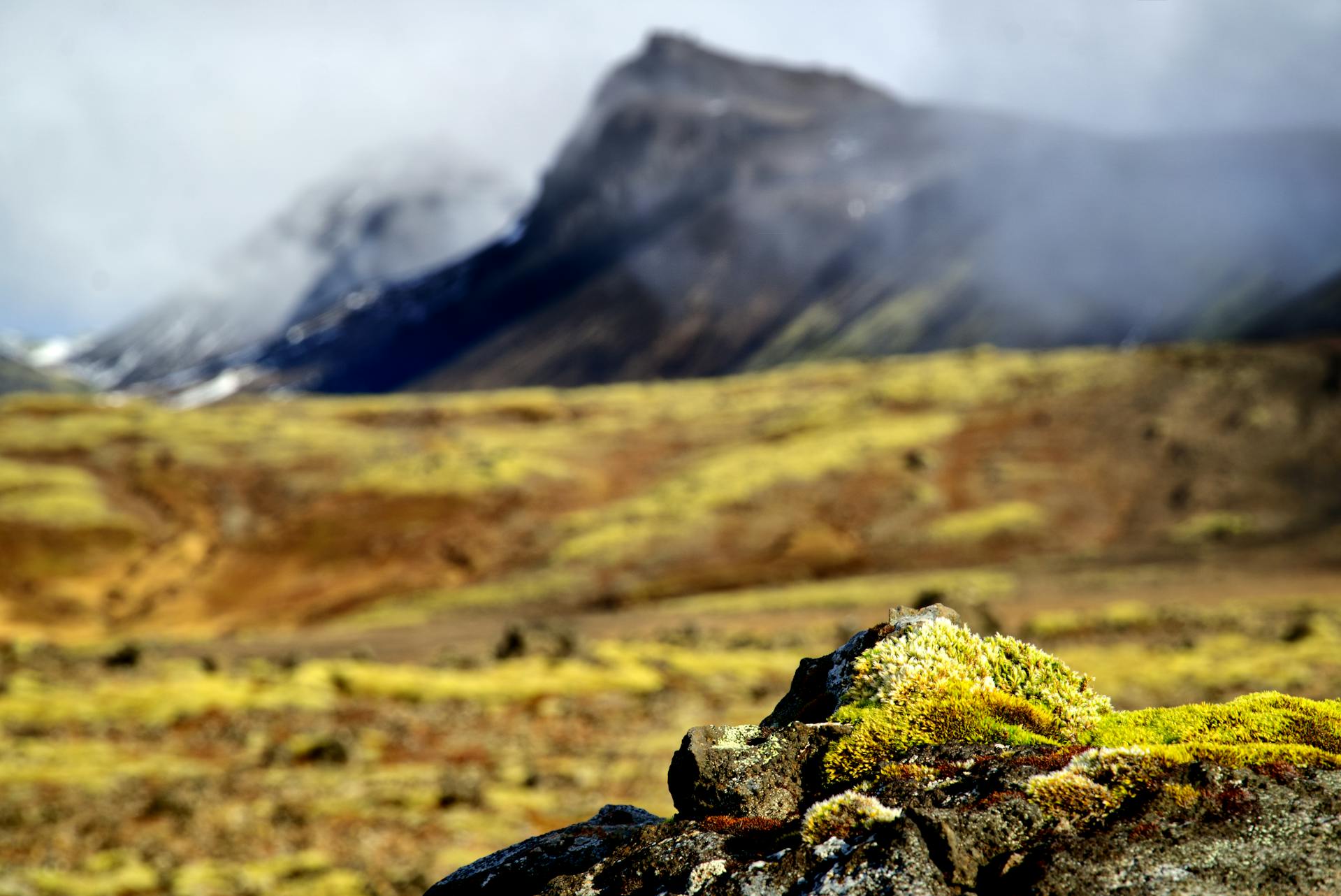
September is the month we would pick if we had one week and no obligation to anyone. It sits between two crowded seasons and gets overlooked by both. Summer visitors have gone home. Winter visitors have not arrived yet. The roads are quiet, the light is extraordinary, and the country is still fully open.
It also has a catch, and we will get to that.
The light comes back
This is the part that surprises people. September is when Iceland gets its nights back.
The month starts with about fifteen hours of daylight and ends with twelve. That is a loss of three hours in four weeks, roughly four minutes a day, and you notice it as the month goes on.
Two things follow from that. The aurora becomes possible again, because the sky finally gets dark enough. And the light during the day turns golden and low for hours rather than minutes – the sun sits at an angle for most of the afternoon in a way it never does in June. Photographers have known this for years, which is why September has quietly become their month.
Everything is still open
This matters more than it sounds. September is the last month when the whole country is properly accessible.
Highland roads are usually still open in the first half, sometimes into the second, depending on the year and the weather. That means Landmannalaugar and Þórsmörk are still reachable, and they are considerably quieter than in July.
Ferries to the Westman Islands and other island routes still run on summer schedules for most of the month.
Coastal roads, mountain passes and the Ring Road are all open and free of the winter closures that start arriving in October.
By mid-October a lot of this begins to shut. September is your last clean window.
The crowds thin out fast
The change is noticeable within days rather than weeks. Icelandic schools go back in late August, European schools too, and the summer traffic disappears with them.
Practically, that means car parks at the main sites have space, restaurants take walk-ins, and accommodation prices drop from peak. You will still meet people at Gullfoss and Reynisfjara – those places never empty – but the difference between the second week of August and the second week of September is real.
The weather, honestly
Here is the catch.
Average temperatures run around 11°C in the day and 6°C at night, which is mild. But September is when the autumn weather systems start rolling in, and they bring wind and rain in bursts. The settled stretches are genuinely beautiful. The unsettled ones are wet and horizontal.
You will probably get both in the same week, and possibly in the same day.
This is not an argument against September. It is an argument for building slack into the plan. If you have five days and five fixed bookings, one bad day breaks the whole thing. If you have five days and three fixed bookings, you move things around and it barely registers.
What September is best for
The aurora, without the cold. You get real darkness from about mid-month while the temperature is still civil and the roads are still easy. Chasing the northern lights in September is considerably more comfortable than in January, and you have almost the same odds on a clear night.
The highlands, quietly. First half of the month, before the roads close. Landmannalaugar in September has autumn colour on the moss and a fraction of the summer traffic.
Photography. Low sun, long golden hours, autumn colour on the tundra, and the possibility of aurora at night. There is no better month for it.
Waterfalls at strength. Summer glacial melt is still feeding the rivers, so the big falls are running high.

What September is not for
Puffins. They are gone. The colonies empty by mid-August and there is nothing left to see by the time September starts. If puffins are the reason for your trip, come in June or July.
Ice caves. The natural ones under the glaciers form in winter and open around November. What you can do in September are the man-made ice tunnels, which run year-round but are a different experience.
What to bring
The short version: waterproofs, layers, and shoes with grip.
September is not cold enough for winter gear but it is wet and windy enough that a fashion raincoat will fail you. A proper waterproof shell with a hood, a fleece or light down mid layer, and merino rather than cotton underneath. Waterproof trousers if you are going anywhere near a waterfall, which you are.
Bring swimwear. The pools are outdoors, geothermal, open all year, and better in cool weather than in warm.
We have written the full version elsewhere.
So, is September worth it
If you want certainty, come in July and accept the crowds and the prices.
If you want the country mostly to yourself, with everything still open, the aurora back on the table and the light at its best, September is the month. You are trading a bit of weather reliability for a great deal of everything else.
We think that is a good trade. Most people who come in September think so too.