



- Book direct, best price anywhere
- Answers from a local within hours
- Licensed tour operator
- Private, your own vehicle and guide
Highland days
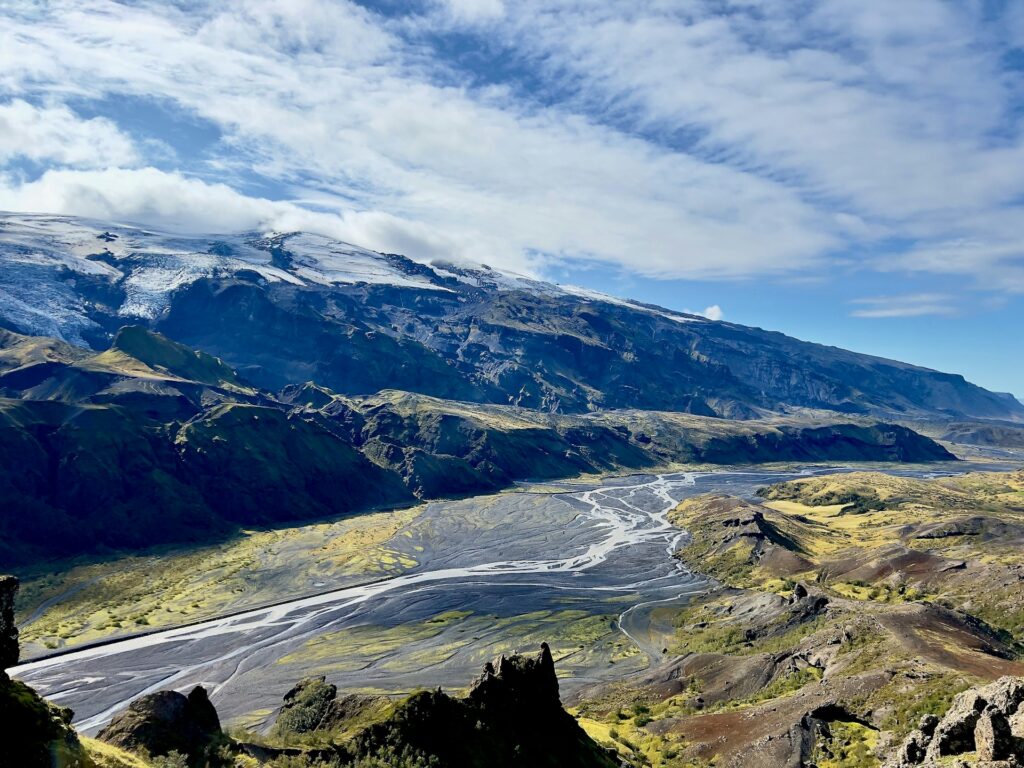
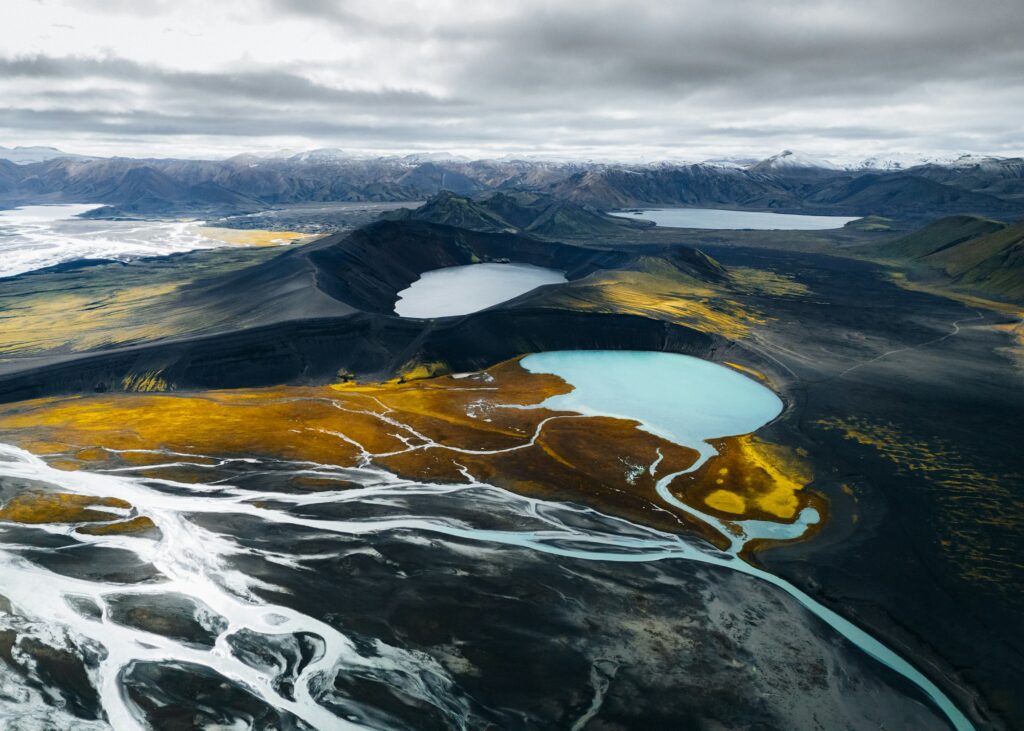
Iceland highlands tours go where the tarmac, the bridges and the other people stop.
The interior of the island is rhyolite mountains, glacial rivers with no crossings, and valleys that stay empty because almost nothing can get there. We take you in privately, by Arctic Trucks Land Rover Defender, on the days the roads allow it.
What the Highlands Actually Are
Most of Iceland’s population lives on a thin ring around the coast. The middle of the island is something else entirely – an uninhabited plateau of volcanic desert, coloured mountains and braided glacial rivers, with no towns, no petrol stations and no phone signal for long stretches. There are no bridges on the tracks that lead there. Access is by unmaintained gravel F-roads, and only for part of the year.
This is why the highlands stay quiet while Seljalandsfoss fills a car park. Getting there takes the right vehicle, a driver who knows how to read a glacial river, and a willingness to accept that the weather decides the day.
Summer temperatures up there run 5 to 15°C and can dip near freezing at elevation, even in July. Wind, rain and fog are normal rather than exceptional.
Why a Super Jeep, and Not a Rental Car
Every rental contract we have read forbids two-wheel-drive cars on F-roads, and the penalty is not a traffic fine but your own damage cover. Breach it and you are liable for the vehicle, which runs to hundreds of thousands of ISK. Most operators also exclude water damage entirely, so if a river reaches your engine, that is yours too – only a couple of companies cover it, and only at their top tier.
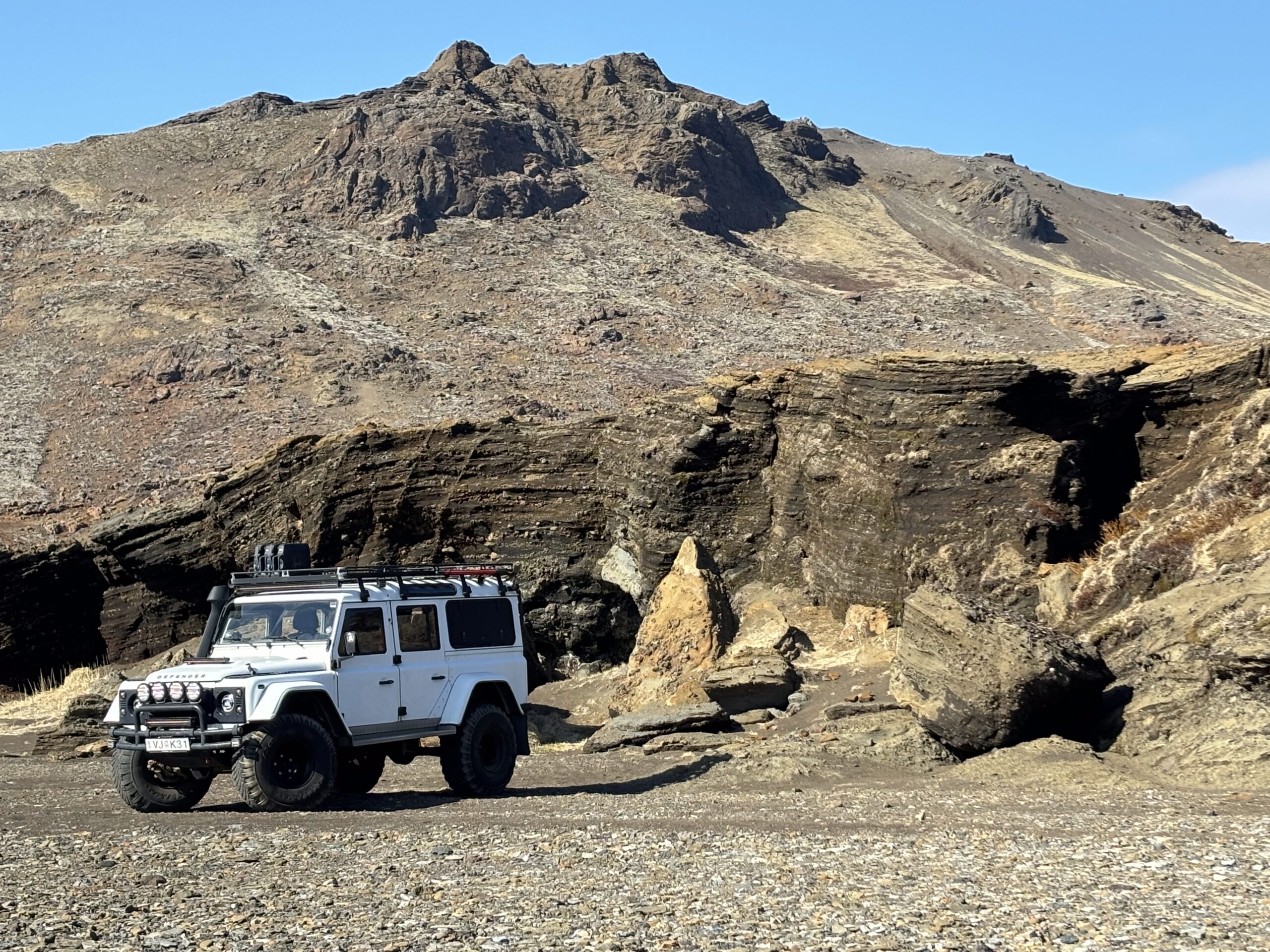
Our Land Rover Defender runs Arctic Trucks AT405 conversion on 38-inch tyres with a snorkel, built for exactly this terrain.
The vehicle is only half of it. Water levels on a glacial river change through the day as the ice melts above, so the crossing you make at nine in the morning is not the crossing at five in the afternoon. Reading the river – where to enter, which line to take, when to turn around – is the part that keeps this safe, and it is the reason we drive it ourselves rather than sending you a map.
To be fair about it: not every highland road needs a vehicle like this. Kjölur has no real fords and a competent driver in a proper 4×4 manages it.
The Alternatives, Honestly
You do not have to book a private tour to reach the highlands, and it is worth knowing what else exists before you spend this kind of money.
There is a scheduled highland bus service running through the summer, roughly early June to mid-September, on modified 4×4 buses that handle the F-roads. It serves Þórsmörk and Landmannalaugar daily from Reykjavík, with stops on the south coast on the way. Fares run from around 11000 ISK one way up to about 27000 ISK for a return, depending on route and where you board.
There is no guide on board. It is transport, and the timetable decides your day – typically arriving late morning and leaving again mid-afternoon, so four or five hours on site. For a solo hiker starting the Laugavegur, that is exactly the right product and we would tell you to book it rather than us.
One thing worth checking if you are travelling with small children: the highland buses are not fitted with child seats, and operators set a minimum height for passengers.
Self-driving works on the easier routes if you have a suitable 4×4 and some experience of this kind of driving. Kjölur has no real fords. F249 into Þórsmörk is a different matter – some rental companies ban that road outright for every vehicle they own, and most exclude water damage from cover at any tier. Read your own agreement rather than the internet’s summary of it.
A shared Super Jeep day tour sits between the two: guided, hotel pickup, fixed itinerary, other people.
What we do is different from all three. Your group, your vehicle, your pace, child seats if you need them, and a driver who adjusts the day around what you turn out to care about. Priced per vehicle rather than per person, so the arithmetic changes with group size. For two people it is a considerable premium over the bus. For five or six it is not.
Bus fares and schedules checked on August 2026. Confirm current prices before you plan around them.
Choosing Between the Three
Landmannalaugar is the colour. Rhyolite mountains in pink, orange, yellow and green, which reads like an exaggeration until you are standing in front of them, at around 600 metres in the Fjallabak Nature Reserve. There is a lava field you can walk into and a natural hot spring where warm ground water meets a cold stream. You can get in it, and most people do. The longest drive of the three.
How much walking you do is up to you and we decide it on the day. Some groups want an hour on their feet, some want to sit by the spring and look at the mountains. Both are fine.
Þórsmörk is the contrast. Birch woods and a green valley floor at around 250 metres, ringed by three glaciers – Eyjafjallajökull, Mýrdalsjökull and Tindfjallajökull. Despite the ice on every side it holds one of Iceland’s largest native birch forests.
We drive F249 as far as Básar, across rivers with no bridges on them. From Básar the walking is up to you. There is a canyon nearby that Game of Thrones viewers may recognise, and there are shorter walks that need nothing more than boots.
Kerlingarfjöll is the steam – a geothermal valley of hissing vents and orange slopes high in the interior, on the Kjölur route between two ice caps.
All three are private, all three run in a Defender with an English-speaking driver-guide, and on all three the day belongs to your group alone.
When the Highlands Are Open
There is no fixed date. Vegagerðin, the Icelandic Road Administration, opens each road individually after physically inspecting the snowpack and the rivers, so the calendar moves every year.
The pattern holds even when the dates do not. Kjölur and the Sigalda-to-Landmannalaugar stretch of F208 are among the earliest, averaging the first days of June across 2021 to 2025. Long crossings like Sprengisandur average early July. Across those five years, individual roads opened as early as 23 May and as late as 15 July. F210 comes later than the rest because of the rivers and the elevation. F249 into Þórsmörk is not in Vegagerðin’s published record at all – it depends on what the rivers are doing rather than on a date.
Closing comes with the first serious snow, anywhere from late September to mid-October.
Outside that window these tours do not run. Live status for every road is published at road.is.
Before You Book
These are full days – between ten and thirteen hours, much of it on rough track. You should be comfortable climbing in and out of a high vehicle and walking on uneven ground. Bring waterproofs, warm layers, proper boots and your own food, because there is nowhere to buy any of it once the gravel starts.
Nature sets the schedule. Stops, order and how long you linger depend on conditions on the day, and the route is always chosen with safety first. That is the deal with the interior, and it is part of why it is worth the drive.
Questions
When do the highland roads open?
There is no fixed date. Vegagerðin opens each road individually after physically inspecting the snowpack and the rivers, so the calendar moves every year.
Kjölur and the Sigalda-to-Landmannalaugar stretch of F208 are among the earliest, typically opening in the first half of June. Longer interior crossings run later, into July. Across 2021 to 2025 the earliest recorded opening was 23 May and the latest 15 July. F249 into Þórsmörk is not in Vegagerðin’s published record at all, so there is no date to plan around – only current conditions.
Closing comes with the first serious snow, from late September to mid-October. Live status for every road is at umferdin.is.
How long is the day?
Ten to thirteen hours door to door, depending on the route and the conditions. Much of that is on rough track, so the driving takes longer than the distance suggests. There is no half-day version of this.
Can I do this in a rental car?
Depends entirely on the route and on your rental agreement, and the agreements disagree with each other more than you would expect.
Every operator we have read forbids two-wheel-drive cars on F-roads. Beyond that it splits: some ban F249 to Þórsmörk outright for every vehicle they rent, some ban only the Krossá ford, and some do not mention the road at all. Most exclude water damage from cover entirely; a couple include it, but only at their top tier.
The practical answer: Kjölur, yes, in a suitable 4×4. Þórsmörk, we would not, and neither would several rental companies. Read your own contract before you decide.
How fit do I need to be?
Moderate. You need to be comfortable climbing in and out of a high vehicle and walking on uneven ground.
None of the walking is technical or long, and how much you do is up to you – some groups want an hour on their feet, some want to sit and look at the mountains. Nothing up there has a handrail, though. Tell us in advance if anyone has mobility limits and we will plan the stops around it.
Is it suitable for children?
The considerations are the length of the day and the time in a vehicle on rough road. Children who travel well and enjoy being outside do fine, and we carry child seats at no extra cost – tell us the ages when you book. Worth knowing that the Highland Bus cannot take children under 135 cm at all, so if you are travelling with small children a private vehicle is not just the comfortable option, it is the only one.
What happens if the road closes?
We check umferdin.is and vedur.is every morning and we would rather move a day than run it badly. If the road is closed or conditions make the drive unsafe, we tell you before you set off.
Can we combine two highland areas in one day?
No, and we will not sell you one that tries. The distances are long and the roads are slow. If you want more than one, take two days.
Is there anywhere to buy food?
Not on the way. There are no petrol stations and no shops once the gravel starts, and while there is a small shop at Landmannalaugar in season, we would not plan a day around it.
Fill the tank and buy what you need in Reykjavik, Selfoss, Hella or Hvolsvöllur before you head in.
Will there be phone signal?
Patchy at best and absent for long stretches. Download offline maps before you leave the city and tell whoever needs to know that you will be out of contact for the day. Anyone travelling independently in the highlands should also leave a travel plan with safetravel.is.
What should I bring?
Waterproof jacket and trousers. Warm layers, because it is meaningfully colder up there than in Reykjavík and the wind is stronger – summer temperatures run 5 to 15°C (41 to 59°F) and can dip near freezing at elevation, even in July. Walking boots, not trainers. Swimwear and a towel for Landmannalaugar. Sunglasses. Food and water for the whole day.
Leave the umbrella at home.
Is it worth it if we have already done the Golden Circle and the South Coast?
Those are the two best days you can have on a paved road, and they are worth doing. But they are edges. Everything you see on both sits within a short drive of the Ring Road, which is where nearly every visitor stays because that is where the tarmac goes.
The interior is a different country. No towns, no farms, no fences, and for long stretches no other vehicle. Mountains in colours that look edited. Rivers with no bridges over them. If you have driven the empty parts of Nevada or the Australian interior you will recognise the feeling, though not the landscape – this is volcanic desert with glaciers on the skyline.
The day itself is different too. You are in a high vehicle on a gravel track rather than a van on asphalt, moving slowly, feeling the road. The driving is part of what you came for rather than the bit between the stops.
And it is seasonal in a way the rest of Iceland is not. These roads open in June and close with the first serious snow in autumn, which leaves a window of a few months. The Golden Circle runs all year. This does not.
If it is your first trip and you have three days, do the accessible things first – they are famous for good reason. If it is your second trip, or you have a week, or you already suspect the busy version of Iceland is not the whole story, this is what you came for.
Get in Touch
Not sure which one to book?
Tell us your dates and how many of you there are. We answer within 24 hours, usually sooner.
Or fill out the form