



- Book direct, best price anywhere
- Answers from a local within hours
- Licensed tour operator
- Private, your own vehicle and guide
Three ways to hunt
A coach leaves at eight with a plan made that afternoon and fifty people who all have to be back at the same time.
We read the cloud cover and aurora forecasts before we collect you and keep reading them while we drive. If the only clear gap is forty-five minutes east, that is where we go.

What we actually do out there
We read the forecast, not the calendar
Two things have to line up: solar activity and a clear sky. The Icelandic Met Office publishes both at vedur.is, and the cloud map decides most nights. Your guide checks it before pickup and keeps checking while you drive.
We move
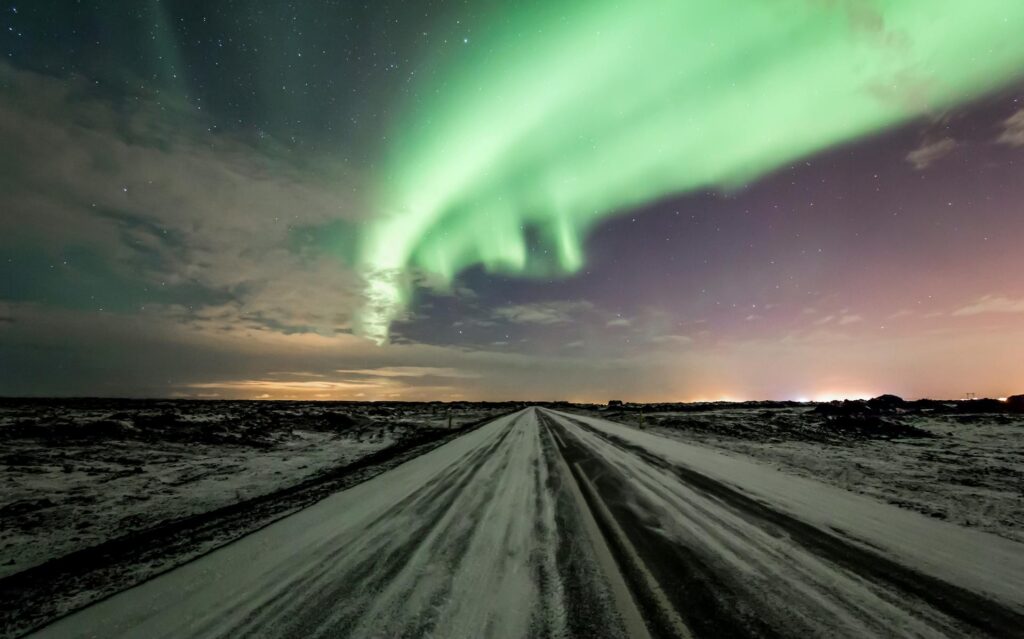
Big vehicles are tied to big car parks. A private car is not. If the clouds shift, we shift with them.
We help with the photos
Phone cameras can capture the aurora, your guide will set yours up.
Your guide chooses the route
Not a schedule, and not the guests. On any given night the best chance might be north, east or nowhere at all, and only someone reading the data that evening can tell.
The honest part
Nobody controls the sky, so nobody can guarantee an aurora. What we can do is read the forecast and move to wherever the sky is clear.
If the forecast leaves no realistic chance anywhere, we cancel no later than two hours before departure. You choose a new date or a full refund.
If we go out and the aurora does not appear, the tour has still taken place as booked.
What you will actually see
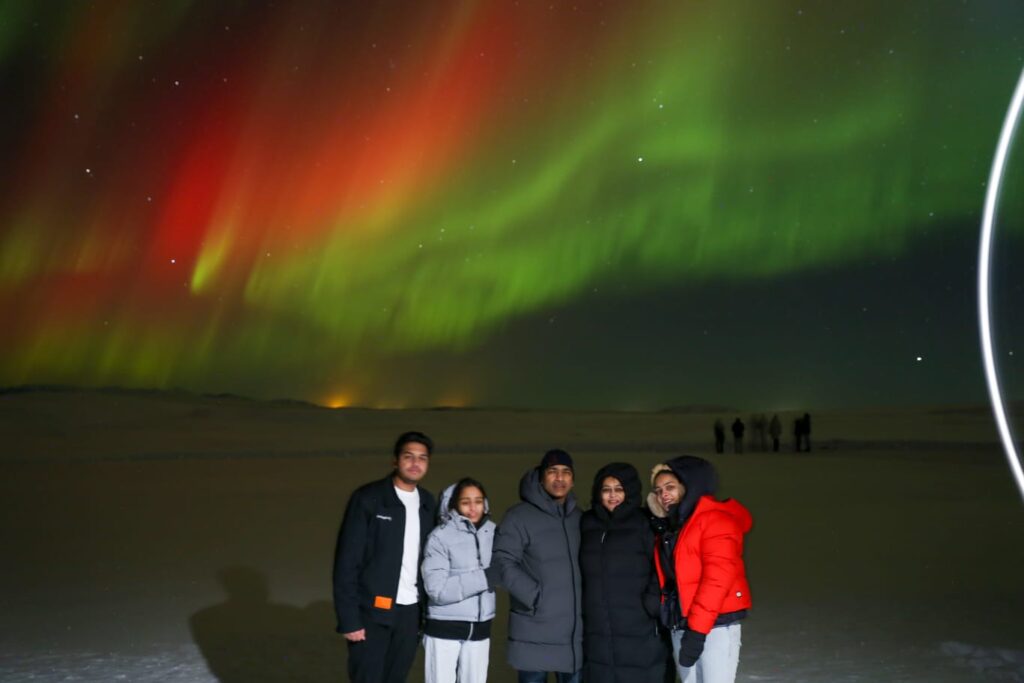
The aurora is not a photograph. It moves, fades, brightens and drifts, sometimes over hours, and no image carries that. Even a soft green band low in the sky is a strange thing to stand under, and nobody gets back in the car unmoved.
To the naked eye a display often starts as a pale band you are not quite sure about, then strengthens. Your eyes see less colour in the dark than a camera sensor does, so a photo will always come out greener than the view. That is physics, not editing, though most images online have had the saturation raised on top of it.
Knowing this in advance changes the night. People who arrive expecting a postcard sometimes miss what is happening above them. People who know what to look for see it first.
When to come
15 September to 15 April. In June and July it never gets dark enough, whatever the forecast says.
September and October are underrated: long enough nights, more settled weather than midwinter and easier roads. December and January give the longest darkness and the least stable conditions.
Days and nights with us
Questions we get
Is the price per person or per vehicle?
Per vehicle. A group of three pays the same as one person.
Do you cancel in bad weather?
If there is no realistic chance anywhere, we cancel no later than two hours before departure and you choose a new date or a full refund.
Is there a minimum age?
No. Children of all ages are welcome, though the return is late. Child seats on request at no extra cost, just tell us the ages when you book.
Can I photograph the aurora with a phone?
Yes, with the right settings, and your guide will help.
Which should we book, the Defender or the standard vehicle?
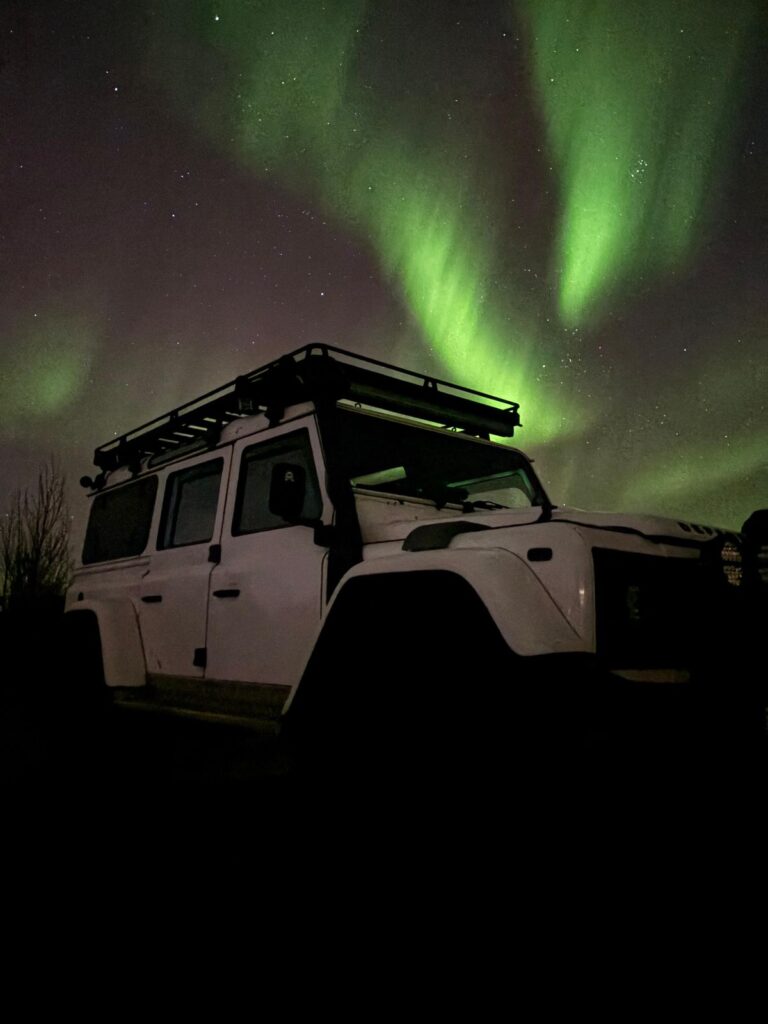
The Defender is a super jeep, so it reaches rough tracks and dark high points off the main road that a standard vehicle cannot. The ride is bumpy on those sections and that is part of it. The standard vehicle is smoother and quieter, and sticks to made roads. Both are private, both have the same guide reading the same forecasts. The difference is where you can end up and what the drive feels like.
Can we see the aurora in summer?
No. Between roughly late April and mid-August it never gets dark enough.
Get in Touch
Ready to hunt?
Tell us your dates and how many of you there are.
Or fill out the form